
Profile
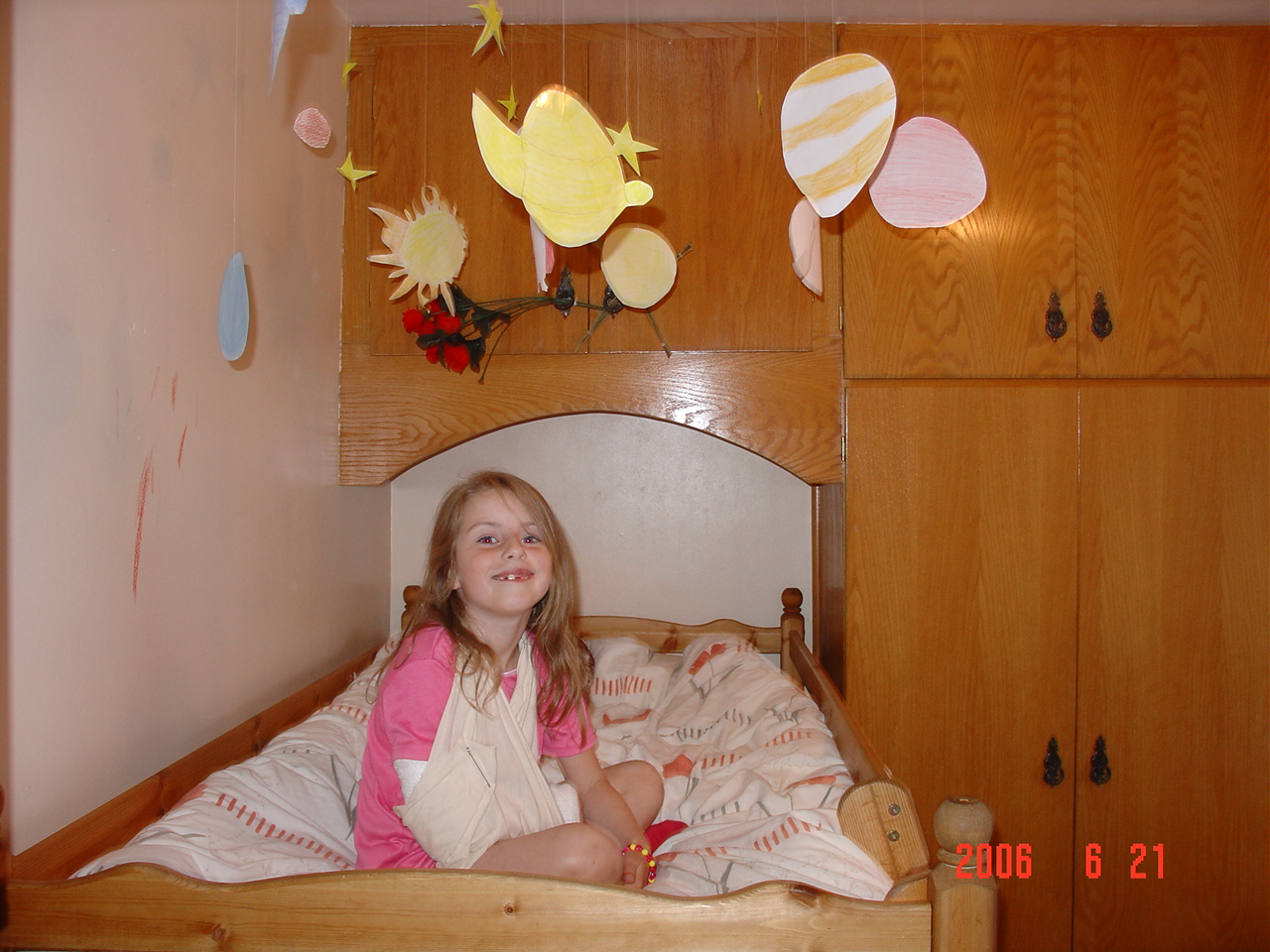
Jenny Power
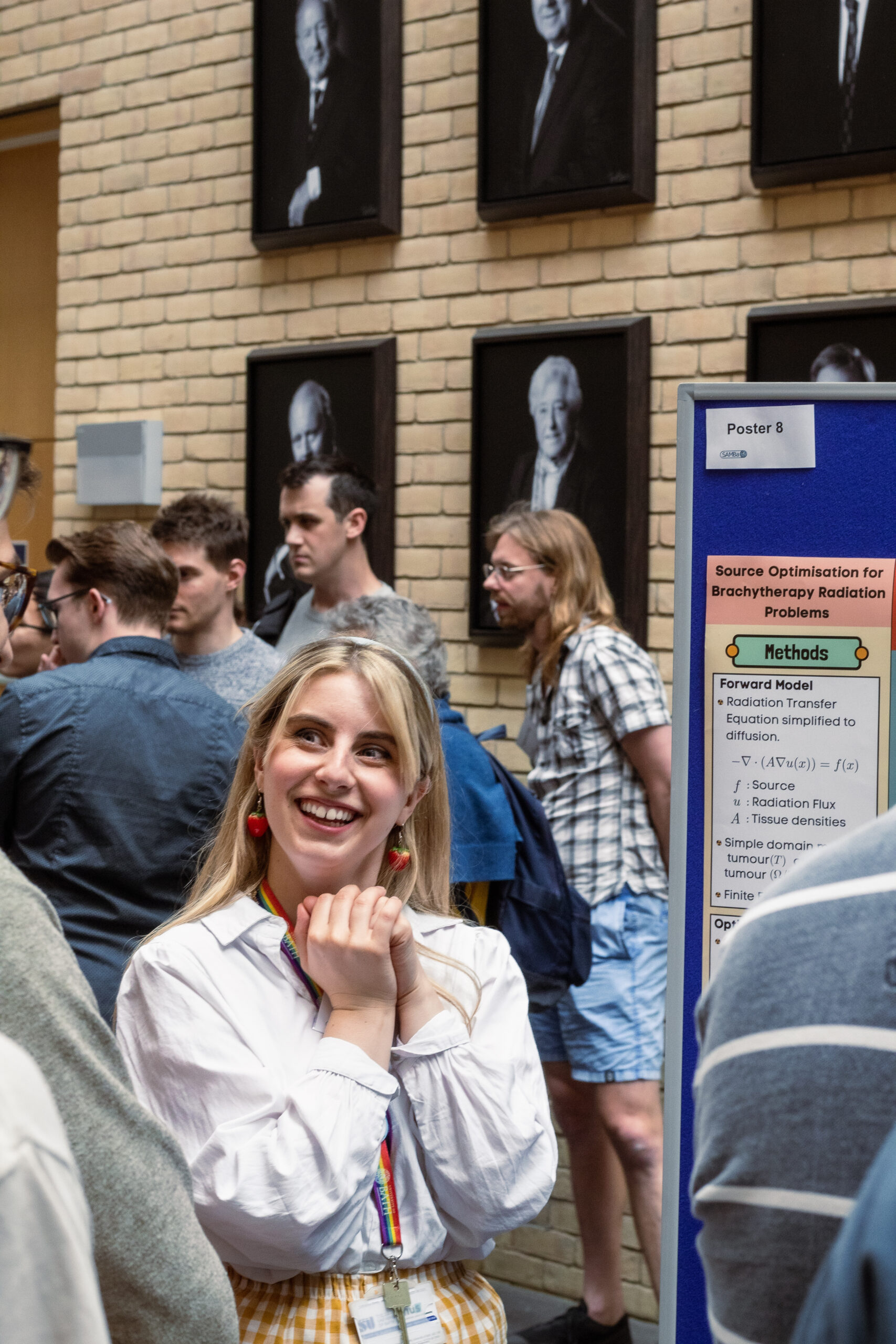
-
About Me:
I am a mathematician with a passion for sharing the beauty and excitement of maths with anyone who will listen! ☀️ I am from Ireland 🇮🇪 but now live in Edinburgh 🏴. I work as a researcher at Heriot-Watt University, using maths to help the world. I love musicals, crafting, and rollerskating! 🎭🧵🛼
-
Read more
I am from Shannon, a small town in the West of Ireland 🇮🇪 I moved to Bath in 2020 to start a PhD (Doctorate degree) which I finished a few months ago so I am now a Dr of Maths! I moved to Edinburgh in Scotland last June to start a new job at a university.
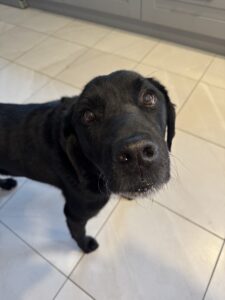
I have a dog named Alfie. He is a golden retriever + border collie mix. He is 10 years old and lives with my parents in Ireland. I love animals!
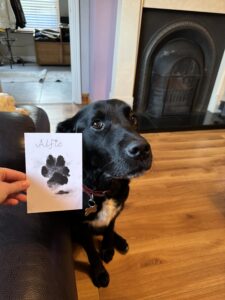
I have a lot of hobbies! I love musicals and have been performing on stage since I was 4 years old! My favourite musical is Into the Woods. I also love rollerskating and have my own skates. I plan on trying out ice-skating this year as they have a rink in Edinburgh!
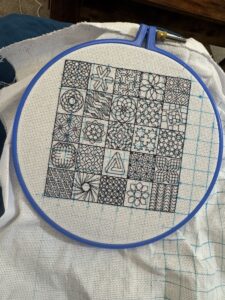
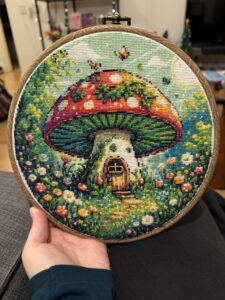
I love crafting and making things with my hands! My main craft is embroidery and cross-stitch. Here are some projects I’ve been working on recently. The first one is 25 different geometry patterns. When I finish it there should be 100! The second one is a mushroom house which I am really proud of. It took me 3 months to make!
-
My pronouns are:
she/her
-
How I use Science in my work:
I am an applied mathematician, which means I use maths to describe and understand what happens in the world around us. Often, this involves combining maths with other science subjects, such as physics, biology and chemistry.
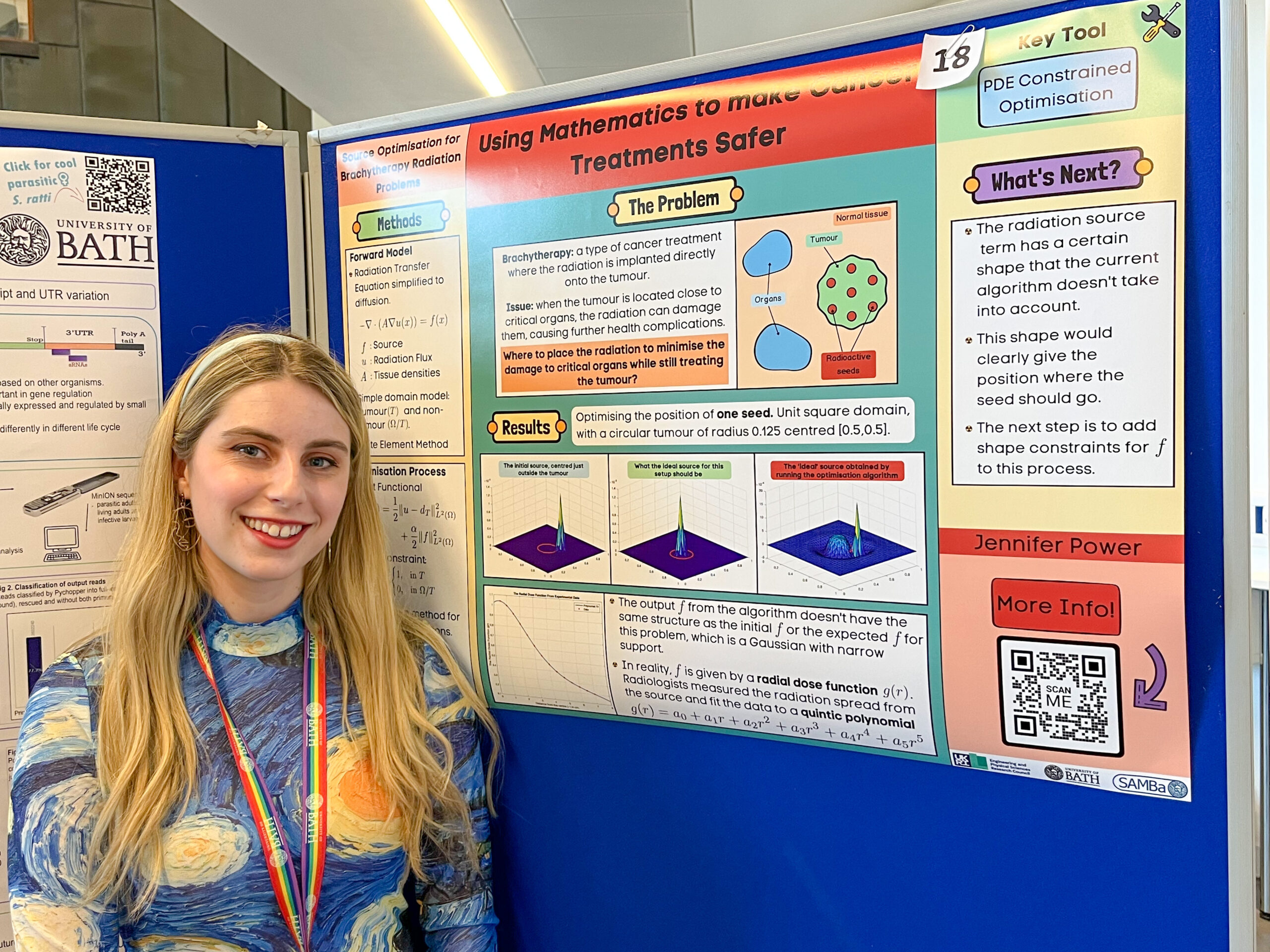
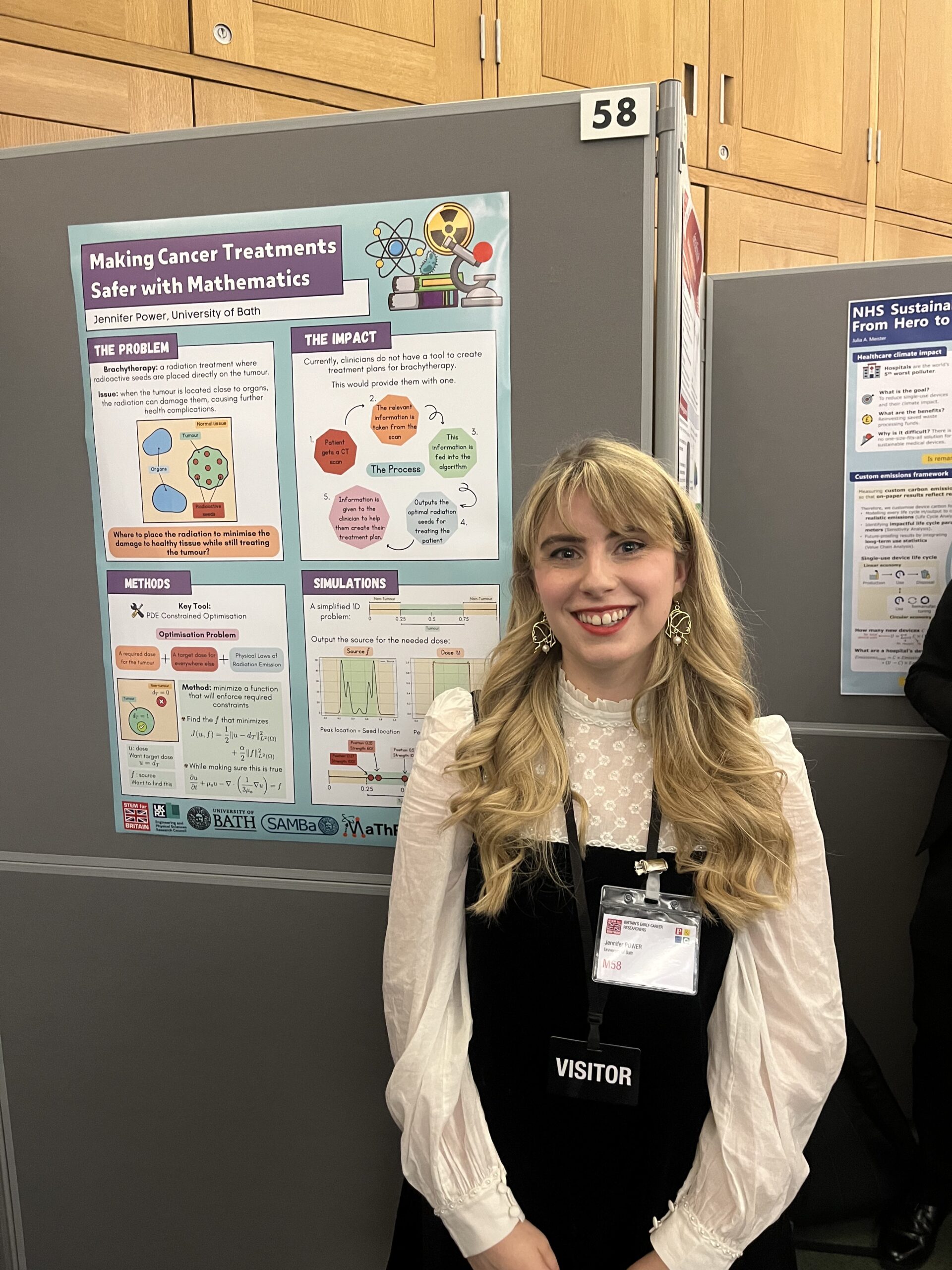
One example is my PhD research, which was about making radiotherapy cancer treatments safer. Radiotherapy uses radiation (a very high-energy form of light) to kill cancer cells. To do this, I needed to understand the physics of how radiation moves through the human body. But I also needed to understand the biology of the body’s cells and how they respond to radiation. I used all of this information to create a mathematical model that describes how radiation changes over time and as it moves through space in the body
-
My Work:
I use maths to solve problems that we see in the world around us. I mainly work using maths to make cancer treatments safer.
-
Read more
I am an applied mathematician, which means I use maths to describe and understand what happens in the world around us. This involves creating mathematical models. These are equations which describe how things behave. For example, if you kick a football, a mathematical model can you tell you how far that football will travel, how high it will go, how fast it will travel, and how long it will take for it to land.
Most of my work uses an area of maths called calculus which looks at how things change in space and time. Some projects I have worked on are:
- Trying to make radiotherapy cancer treatments as safe as they can be. Radiotherapy uses radiation (a very high-energy form of light) to kill cancer cells. It is an amazing treatment, but sometimes you can get unwanted side effects like the radiation damaging healthy tissue that is near the tumour. My work looked at finding the best way to deliver the treatment to minimise damage to healthy tissue but still making sure the tumour gets enough radiation to be killed.
- Predicting when landslides might happen in Brazil. Brazil has lots of rocky and mountainous terrain, especially near the coast. Because of this, if it rains too much, the soil becomes very floaded and can break away from the mountains, causing a landslide. This can be very dangerous for people who live near to the mountains. Being able to predict when the landslides might happen is super important as it will give time for the people who live there to evacuate.
-
My Typical Day:
I wake up, get dressed and make a coffee. I travel by bus to my office at the university, which takes me an hour. I get to the office at 10am. The work I do each day changes depending on what project I am working on, but it is a mixture of creating mathematical models, writing code and doing experiments, and having meetings. I have lunch at 12pm and make a cup of tea at 3pm. I leave work at 6pm and spend the evening doing my hobbies!
-
Read more
I wake up at 8am and get dressed. I love wearing clothes with bright colours, especially when the weather outside is gloomy! I make a coffee which I drink while I am getting ready. If I want to treat myself, I will buy myself a coffee from the cafe instead (I love a salted caramel latte!).
I travel by bus to my office at the university. This journey takes an hour, but I don’t mind. I spend this time reading books, sending some emails, or watching videos online.
The work I do each day changes depending on what project I am working on. I spend a lot of time creating mathematical models. These are equations which describe how things in real life work. To do this, I read books and science papers, and do maths on the chalkboard to work out my problem. A large part of my job is thinking. I use a computer to simulate my model so I can see plots of what my equations look like and do experiments with it to get results. This involves a lot of coding which I find fun.
I also do a lot of writing as a big part of being a researcher is keeping track of what you’ve done, and publishing new results in scientific journals.
I also have meetings with my colleagues and also businesses I work with. A big part of my job is explaining what maths I have done and why it is helpful to business people. I like to think of this as maths translation in a similar way to having someone translate languages. The maths I do can be very complicated, and using too much detail can be very confusing for someone who doesn’t work with maths everyday. I have to be able to understand the level of knowledge the person I’m talking with has and explain my work at this level. It is challenging and fun!
Most evenings, I leave my office around 5 or 6pm. I cook dinner, and I spend the evenings do my hobbies! This is either going to rehearsals for the musical I am performing in, going rollerskating, reading books, or doing some crafts while watching TV.
Two evenings a week I stay later in my office to do Maths Circles on Parallel. I will do online maths livestreams talking about an area of maths that isn’t relevant to the GSCEs but is interesting and fun to learn about! For example, I have done sessions on the maths behind rubix cubes, tetris, sukoku and wordle, the maths of snowflakes, and the maths of maps!
I go to bed around 11pm but usually don’t fall asleep until 12am.
-
What I'd do with the prize money:
I am really passionate about maths communication and outreach and want to do more of it. I would use the prize money to buy more equipment to do cooler demonstrations when I go to schools to talk about maths or give workshops at science fairs!
At the moment, I have to rely on just what I can put on a slideshow. This is fine, but having props will make my talks a lot more exciting and memorable! The talks I remember most from when I was a kid are the ones where the presenter got us to do something with our hands and get involved in the demonstrations. I want to be able to give those same experiences to others and inspire the next generation of scientists!
-
Education:
I went to secondary school at St Patrick’s Comprehensive School in Shannon, Ireland.
For university, I went to the University of Limerick in Limerick, Ireland to study maths and physics. I lived at home and commuted instead of moving out.
For my Masters and PhD, I moved to the UK and studied at the University of Bath in Somerset. I got a scholarship for this.
-
Qualifications:
Irish Junior Certificate (2014)
Irish Leaving Certificate (2016). I got 515/625 points. I took 8 subjects: English, Irish, Maths, French, Art, Graphic Design, Physics, Applied Mathematics.
Bachelor of Science (BSc) in Mathematics and Physics from the University of Limerick, Ireland (2016 – 2020)
Masters of Research (MRes) in Statistical Applied Mathematics from the University of Bath (2020 – 2021)
Doctor of Philosophy (PhD) in Applied Mathematics from the University of Bath (2021 – 2025)
-
Work History:
My first job was babysitting my younger cousins for my aunt and uncle. This is what I did when I was in secondary school.
When I started university in 2016, I got my first part-time job alongside it, which I did at the weekends and over the summer. I worked at the hotel near my house as a waitress and bartender. I did this for four years until I graduated from undergrad.
To make some extra money, I also did private maths tutoring in the evenings after university.
During the summer of my second-year of university, I was awarded a 12-week paid research internship in the maths department at my university. This was my first research experience! I did a project on the maths of ultrasound imaging for detecting breast cancer.
In my 3rd year of uni, I moved abroad to the Netherlands to do another paid research internship as part of my degree! This was a physics job. I lived in Eindhoven for 9 months and worked in a laserlab doing experimental research for printing circuits. I loved it!
In 2020 I moved to Bath to do start a PhD! This is a degree where you do 4 years of new research and have to write a big report about it called a thesis. Most people get paid to do a PhD, though it is not a lot of money. It is both a job and studying. My PhD focused on using maths to design radiotherapy cancer treatments.
I did a lot of extra jobs during my PhD! I was a teaching assistant at the University of Bath. This meant that I would help the undergrad students with their maths problems. I also had a job at the weekends as a tutor for the Bath Maths Circles. These are in-person sessions where secondary students aged 12-15 come in and learn some extra maths that isn’t related to their GCSEs.
I also worked with a company called Studyclix as a content creator. This is an Irish online learning platform that helps school kids prepare for exams. I made maths videos going through the solutions to old exam papers.
For 3 months during my PhD I worked as a research assistant at the Institute for Mathematical Innovation at Bath. I collaborated with people in Brazil, using maths to predict when landslides might occur.
-
Current Job:
I work as an Maths Innovation Research Associate. This is a research role and involves working with companies to use maths to solve their problems. I am also a Maths Communicator which involves talking about maths with people who aren’t mathematicians.
-
Employer:
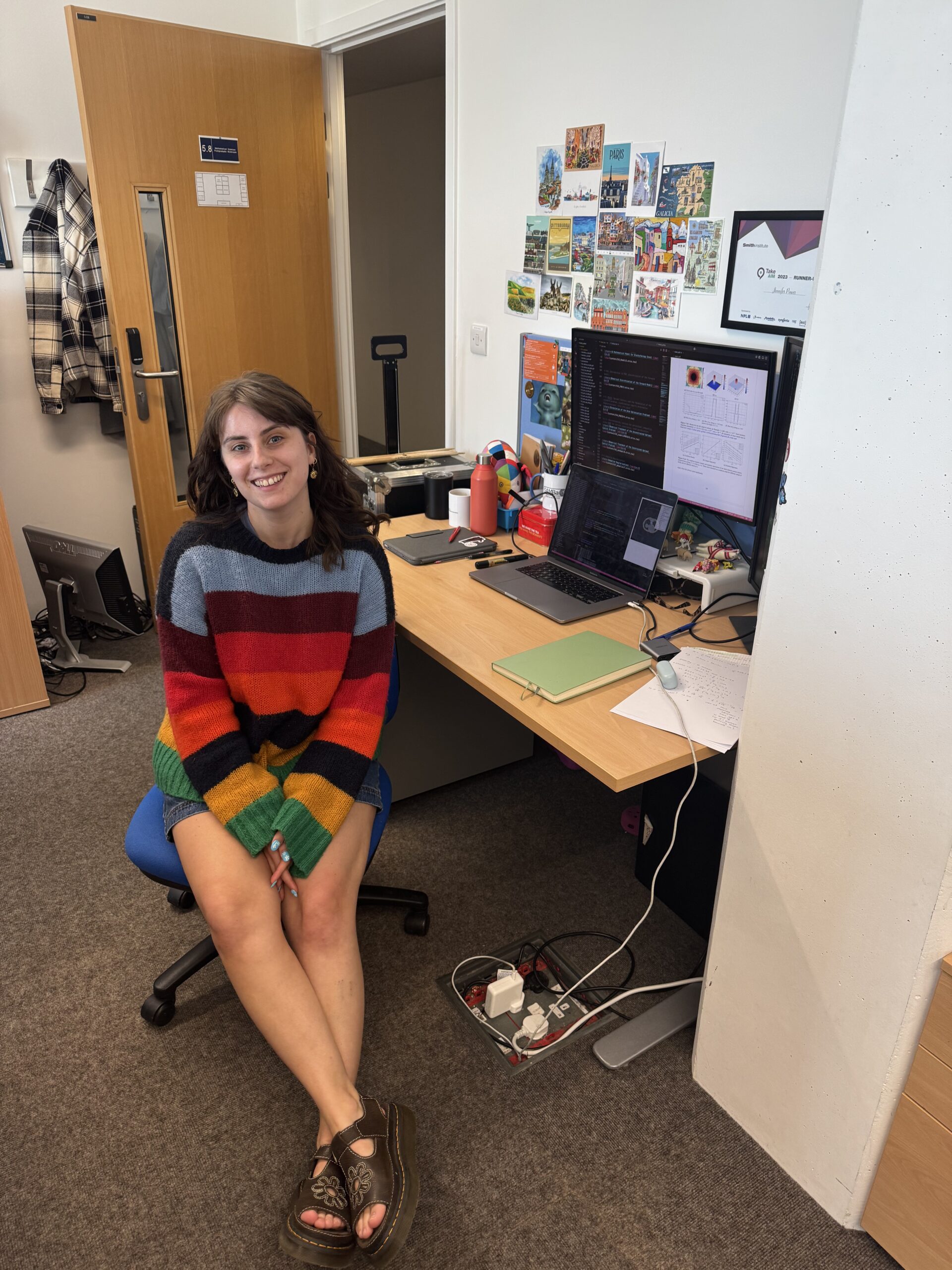
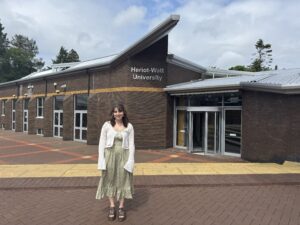
I work at the Mathematics-Driven Innovation Centre at Heriot-Watt University. This is a picture of my on my first day.
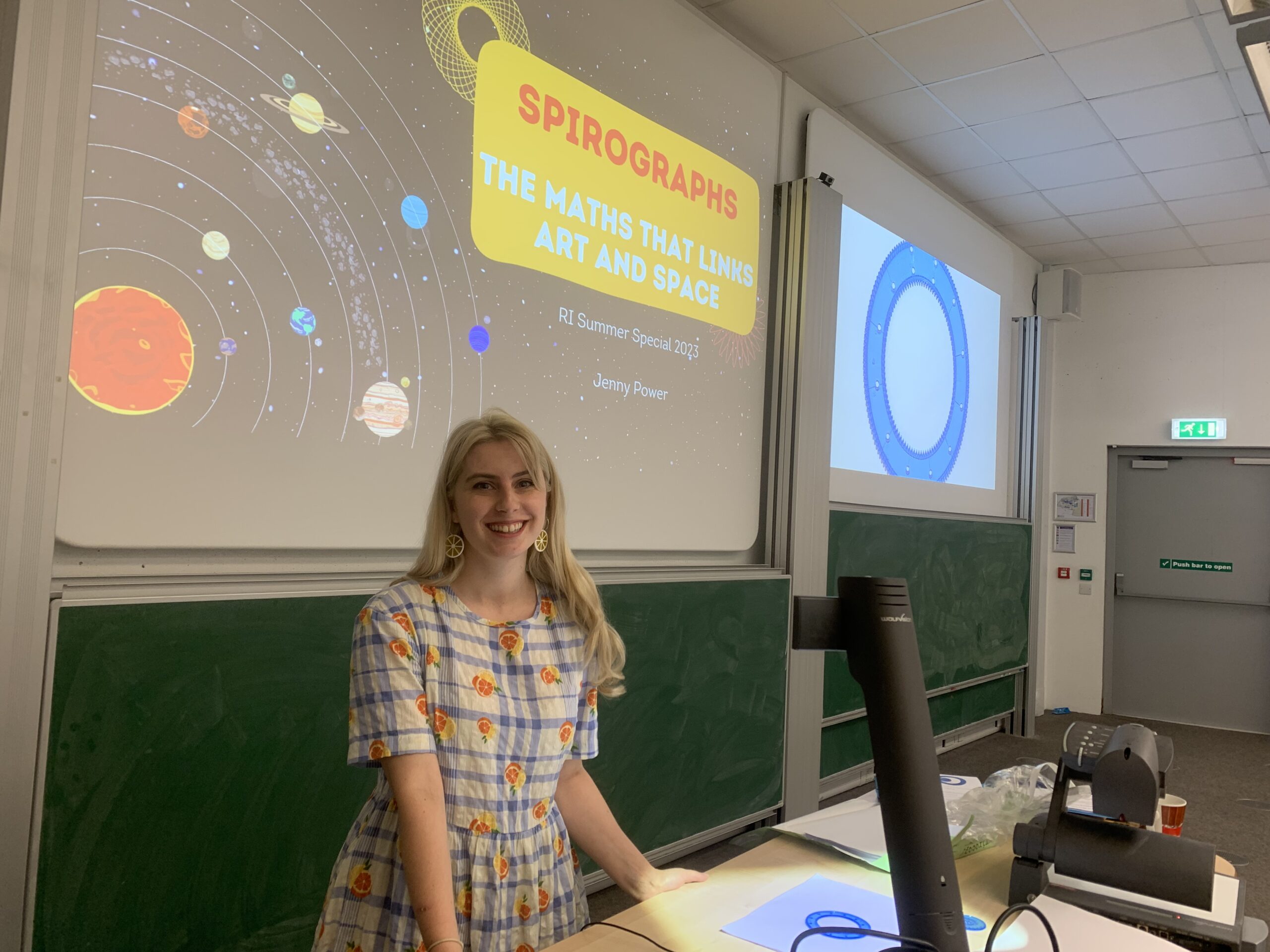
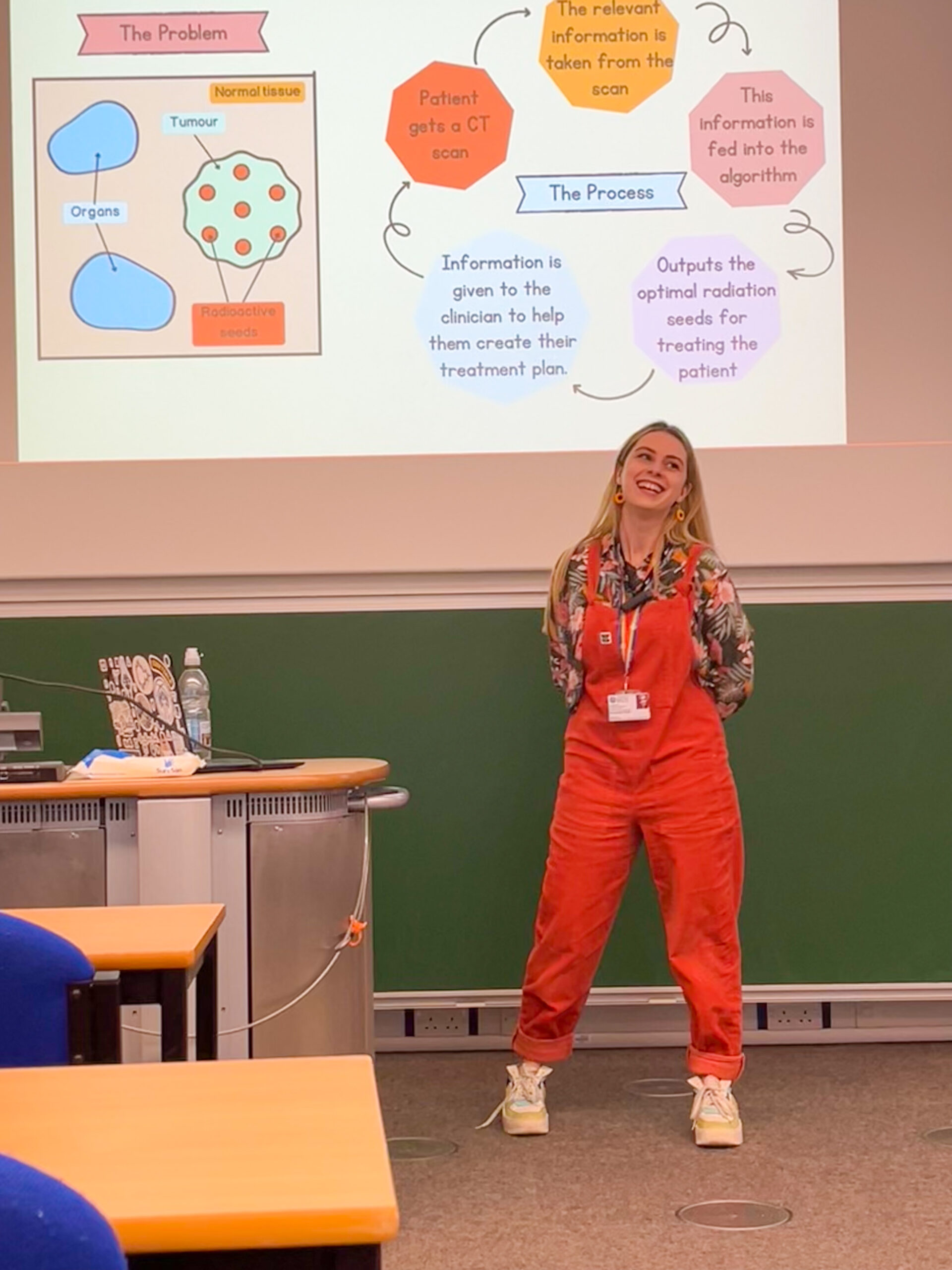
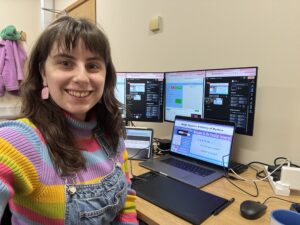
I also work freelance for Parallel by Simon Singh’s Maths Circles. This is a photo of me getting ready to do a maths circle livestream!
-
My Interview
-
How would you describe yourself in 3 words?
theatrical rollerskating mathematician
What did you want to be after you left school?
When I was 9 I wanted to be a vet. When I was 13 I wanted to be a graphic designer or work for Lego designing Lego sets! When I was 16 I wanted to be a physicist and work at CERN.
Were you ever in trouble at school?
A few times in secondary school. Mainly for talking during French class. I also got in trouble for forgetting my homework
If you weren't doing this job, what would you choose instead?
I would love to work in a bookshop! Or else at animal rescue centre
Who is your favourite singer or band?
Gracie Abrams or Maisie Peters
What's your favourite food?
Thai Red Curry with Tofu (I'm vegetarian!)
If you had 3 wishes for yourself what would they be? - be honest!
(1) I would wish to have enough money to buy a house with a garden so I can get a dog. (2) I wish to travel the world (3) I wish to have enough time read all of the books I want to read and do all the crafts I want to make!
Tell us a joke.
What's a mathematicians favourite type of tree? Geometry
-