
Profile

Cara Waters
-
About Me:
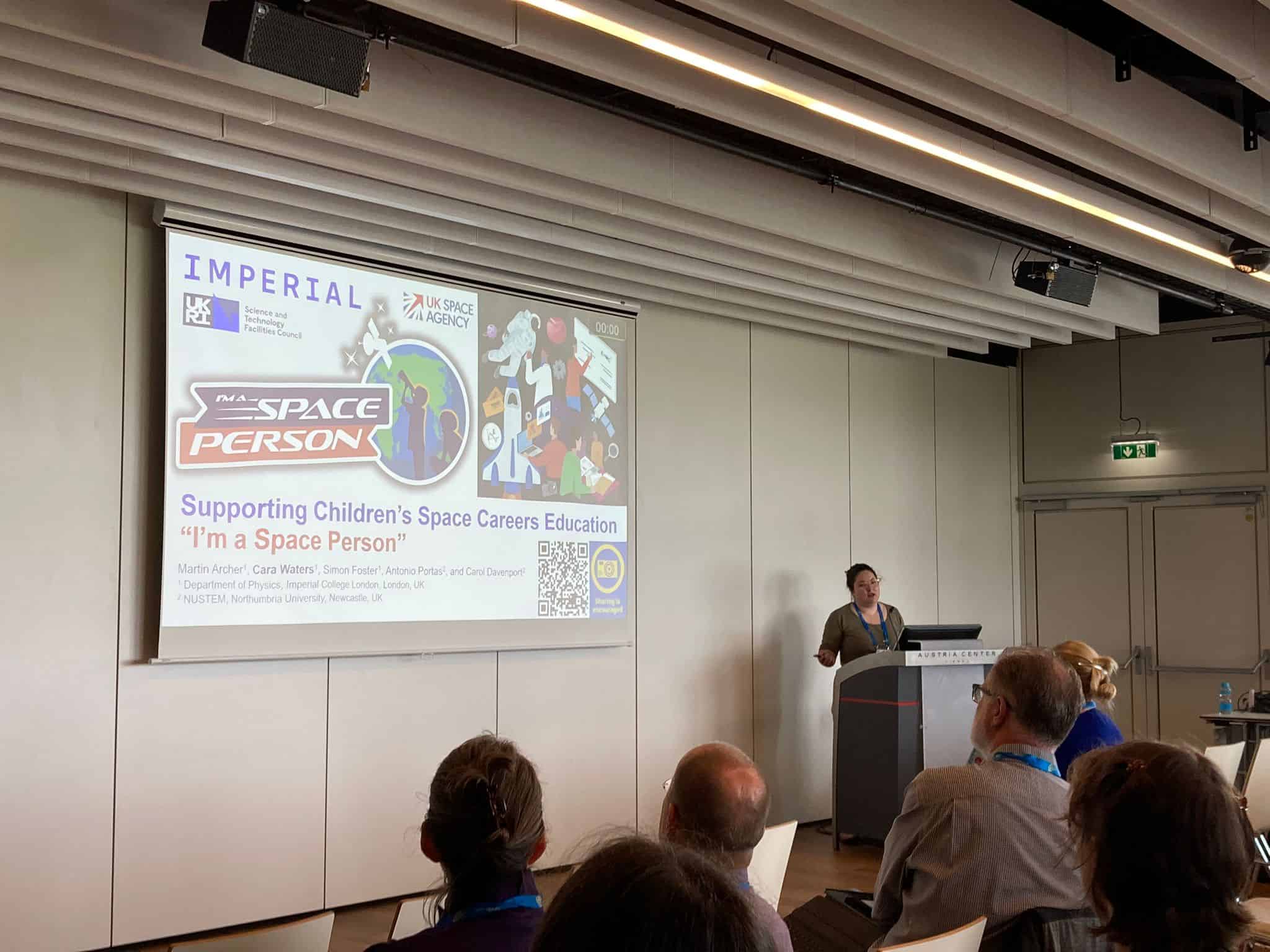
I live and work in London. Most of the time I’m a space scientist 🛰️, but in the evenings I play the bassoon in an orchestra 🎵, play video games 🎮, and knit 🧶!
-
Read more
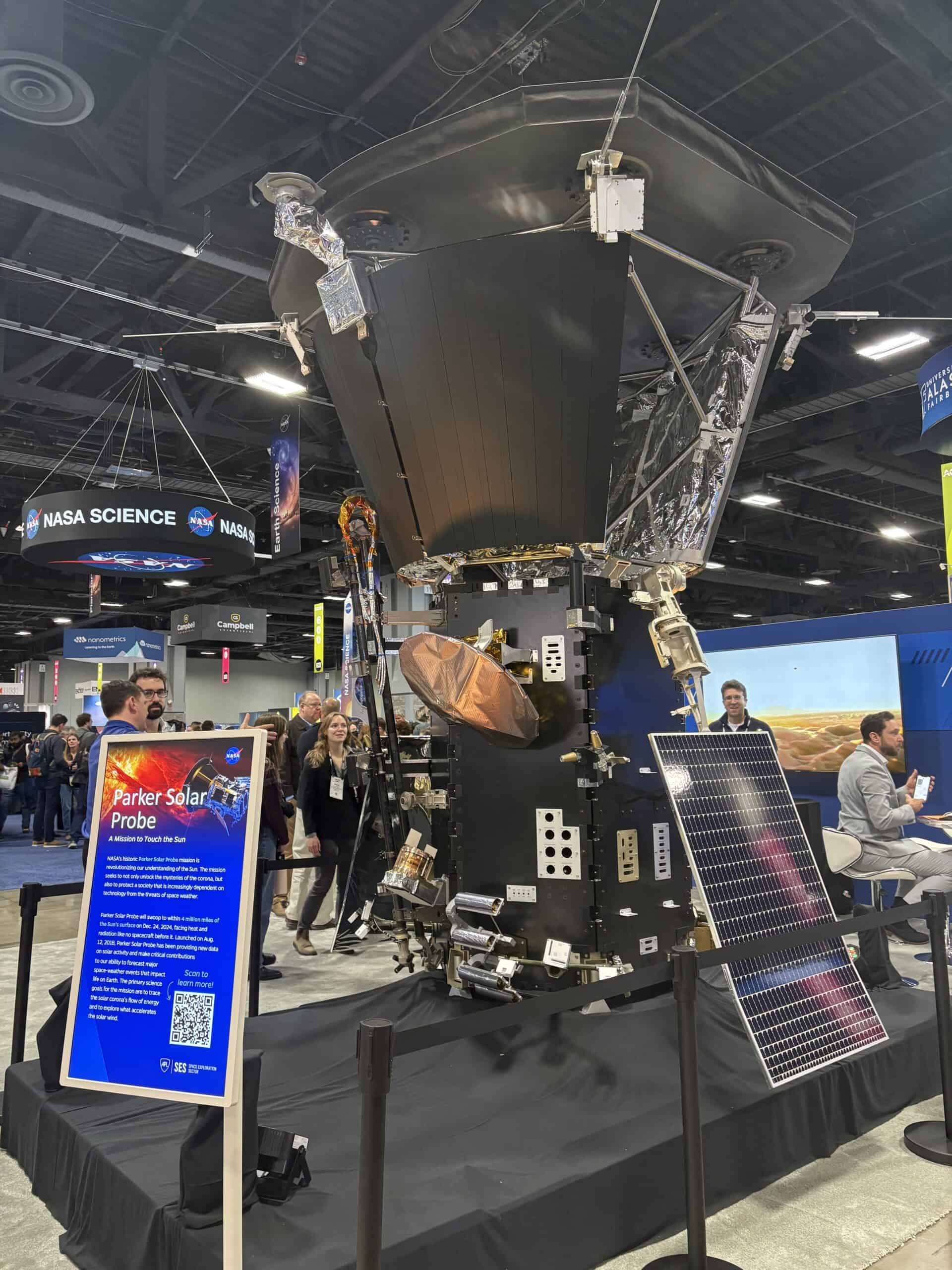
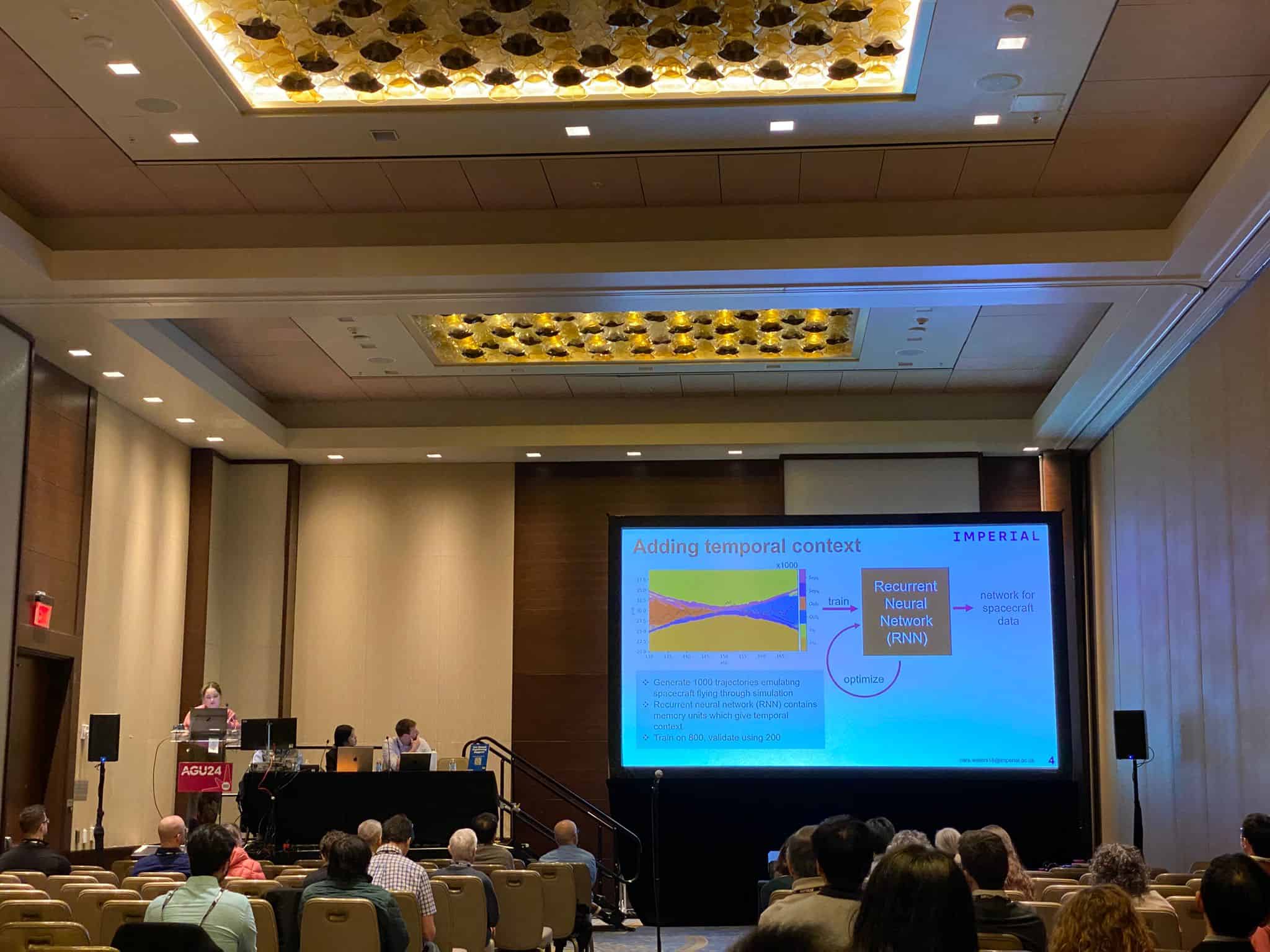
My job involves looking at data measured by satellites out in our Solar System. I use AI to get information from what’s been measured. The aim of my work is to understand what the Sun does to Earth in a field called “space weather”! The Sun gives out things such as solar flares, and these impact the Earth to cause the aurora and can affect electricity cables and radio signals.
Before my current job, I did a PhD in the same research, which I finished in 2025. I did an undergraduate degree in Physics before this, having taken A levels in Physics, Chemistry, Maths and Further Maths. Before the last year of my degree I didn’t even know I wanted to work on space – I actually thought it was too big and scary! My parents didn’t go to university, so everything was a new experience for me.
Outside of work, I play the bassoon in an orchestra (for fun!), play video games, watch women’s football and F1, and knit and sew clothes! I do a lot of different things, but it’s nice to come home from work and be able to choose between different projects I’m working on, or do something a bit more relaxed.
-
My pronouns are:
she/her
-
How I use Science in my work:
All of my work involves science! I have to know about space and a lot of different bits of physics that you learn about in school. Everything in space has a magnetic field which is important, and there are lots of charged particles which experience forces. These also make electric currents which interact with the magnetic fields and give the particles energy. I use computer programming to look at data, looking at how things change in time by turning them into graphs.
-
My Work:
I’m a researcher looking at how the Sun interacts with the Earth’s magnetic field to cause things like the aurora.
-
Read more
I am a scientist who studies invisible storms that come from the Sun and travel through space to Earth. These storms hit Earth’s magnetic shield, which protects our planet, and can cause beautiful lights in the sky called the aurora. I use information from satellites and computers to look for patterns and understand how these storms move and change. My work helps us understand space weather and how it can affect things we use every day, like satellites, GPS, and power systems.
-
My Typical Day:
I wake up and have breakfast, then travel to work in the morning. When I arrive, I switch on my computer and look at data sent back from satellites in space. I use maths and computer programs to spot patterns and understand what is happening around Earth. I usually have lunch with colleagues, then spend the afternoon making plots, writing notes, or testing new ideas. At the end of the day, I shut down my computer and go home.
-
Read more
The data I work with can be very messy, so I spend time checking it and fixing problems before I can use it. I turn long lists of numbers into pictures and graphs to help me see what is going on. I also write computer code to test ideas and see if my results make sense. Sometimes I compare my results with other scientists or talk about them in meetings. My work is a bit like solving a puzzle, where I slowly build up a picture of what is happening in space.
-
What I'd do with the prize money:
If I were awarded the £500 prize, I would use it to develop STEM public engagement activities specifically aimed at encouraging girls to engage with physics, maths, and computing. This would include running small, interactive workshops in schools where girls can work with real space science data, create visualisations, and see how scientists use computers to solve problems. Part of the funding would be used to create accessible, reusable resources that highlight female scientists and different career paths in STEM, helping students see people like themselves in science. The remaining funds would support travel and materials so these activities can reach a wider range of schools and students.
-
Education:
I went to Colchester County High School for Girls from the ages of 11 to 18, doing both my GCSEs and A levels there (2011-2018). At school I studied lots of different subjects, including maths, science, and music. I spent a lot of time playing music, which helped me learn how to practise, work as part of a group, and build confidence. After leaving school at 18, I went to Imperial College London to study physics (2018-2022), where I learned about space, the Sun, and how Earth is affected by space. After this, I stayed at Imperial and completed a PhD from 22 to 25 (2022-2025), which involves both learning and research, where I trained to become a space scientist and learned how to use computers and satellite data to answer big questions about our planet and space.
-
Qualifications:
11 GCSEs (Maths, Physics, Chemistry, Biology, Music, Latin, French, Geography, Religious Studies, English Language, English Literature), Additional Maths
4 A levels (Maths, Further Maths, Physics, Chemistry), Extended Project Qualification
Grade 8 Clarinet, Grade 8 Bassoon
MSci Physics (final project in Space Plasma Physics)
PhD Physics Research (Space Plasma Physics)
-
Work History:
I did not have paid jobs while I was at school or studying for my degree, as I was focused on my studies and music. My work history began during my PhD, when I worked as a researcher and also helped teach undergraduate students at the university. This involved supporting classes, explaining ideas, and helping students learn.
Postdoctoral Research Associate at Queen Mary University of London (2025-now)
Graduate Teaching Assistant at Imperial College London (2022-2025)
-
Current Job:
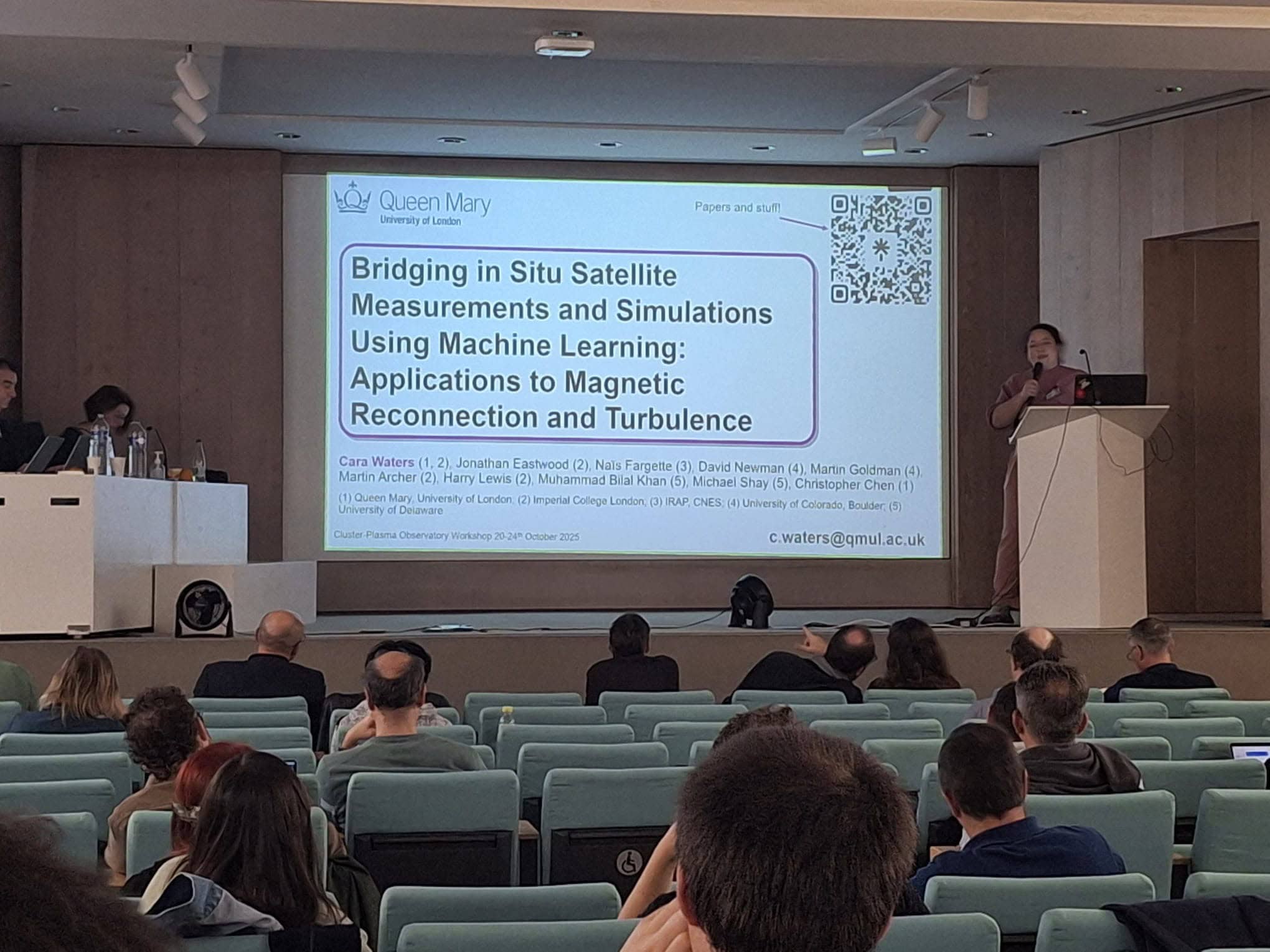
I currently work as a space scientist and researcher at Queen Mary University of London. In my job, I use computers, maths, and data from satellites to study invisible storms in space and understand how the Sun affects Earth. I work as part of a team, and we have meetings where we talk about our ideas and help each other solve problems. I also go to talks where people explain lots of different kinds of science, which helps me learn new things. My job is about asking questions, working together, and learning more about space every day.
-
Employer:
I work at Queen Mary University of London, which is a university where people learn, teach, and discover new things. Universities are places where students study different subjects, and researchers work to answer important questions about the world. At Queen Mary, people work on many different topics, from science and medicine to history and engineering. My employer supports me by giving me time and space to do research, work with my team, teach students, and share science with the public.
-
My Interview
-
How would you describe yourself in 3 words?
creative space scientist
What did you want to be after you left school?
I didn't know - I changed my mind a lot!
Were you ever in trouble at school?
Never!
If you weren't doing this job, what would you choose instead?
I'd be a classical musician in an orchestra playing the bassoon
Who is your favourite singer or band?
Chappell Roan
What's your favourite food?
Pasta
If you had 3 wishes for yourself what would they be? - be honest!
Always help others believe in themselves. Enjoy learning every day. Solve space mysteries.
Tell us a joke.
Why are we all a bit like a space mission? Because we’re all solar orbiters!
-